A Shared Victory.A Shared Sacrifice.A Shared Remembrance.
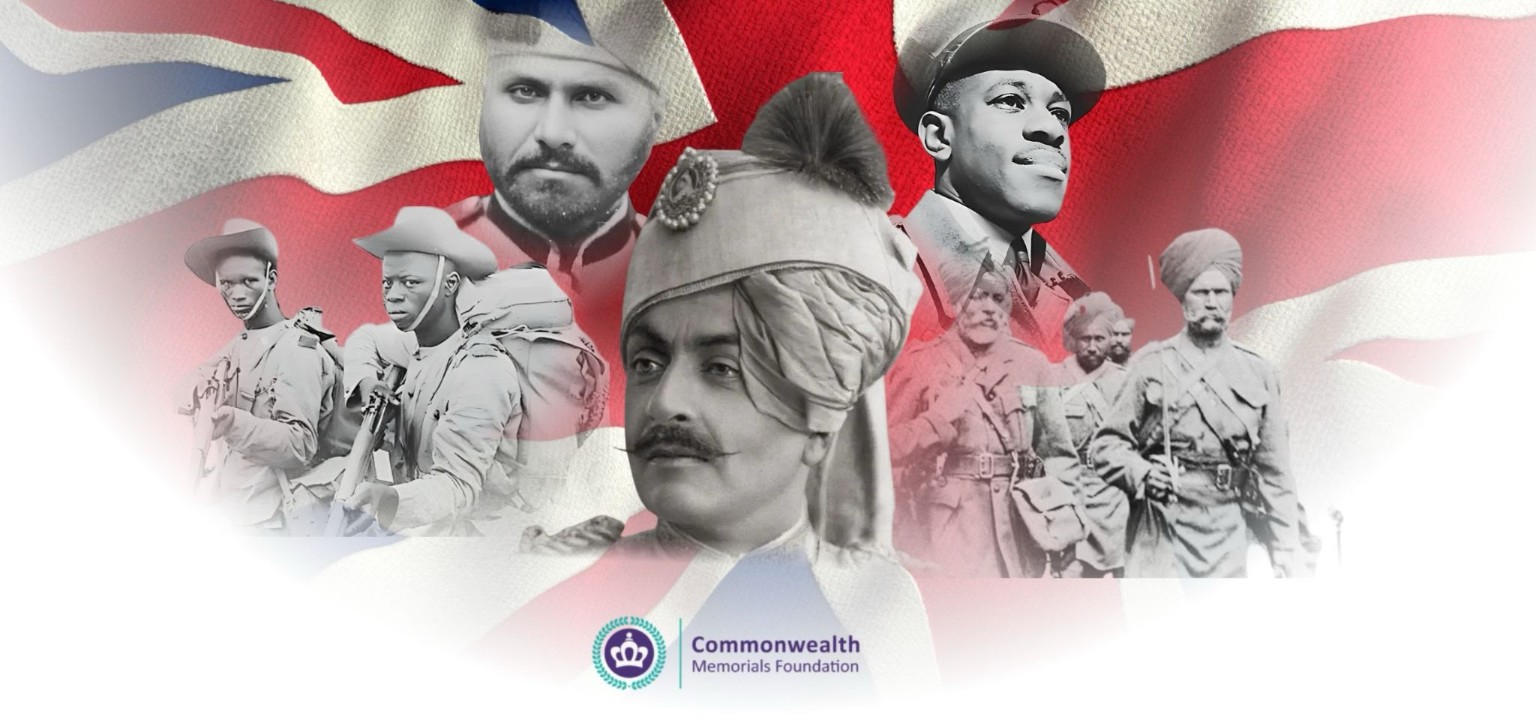
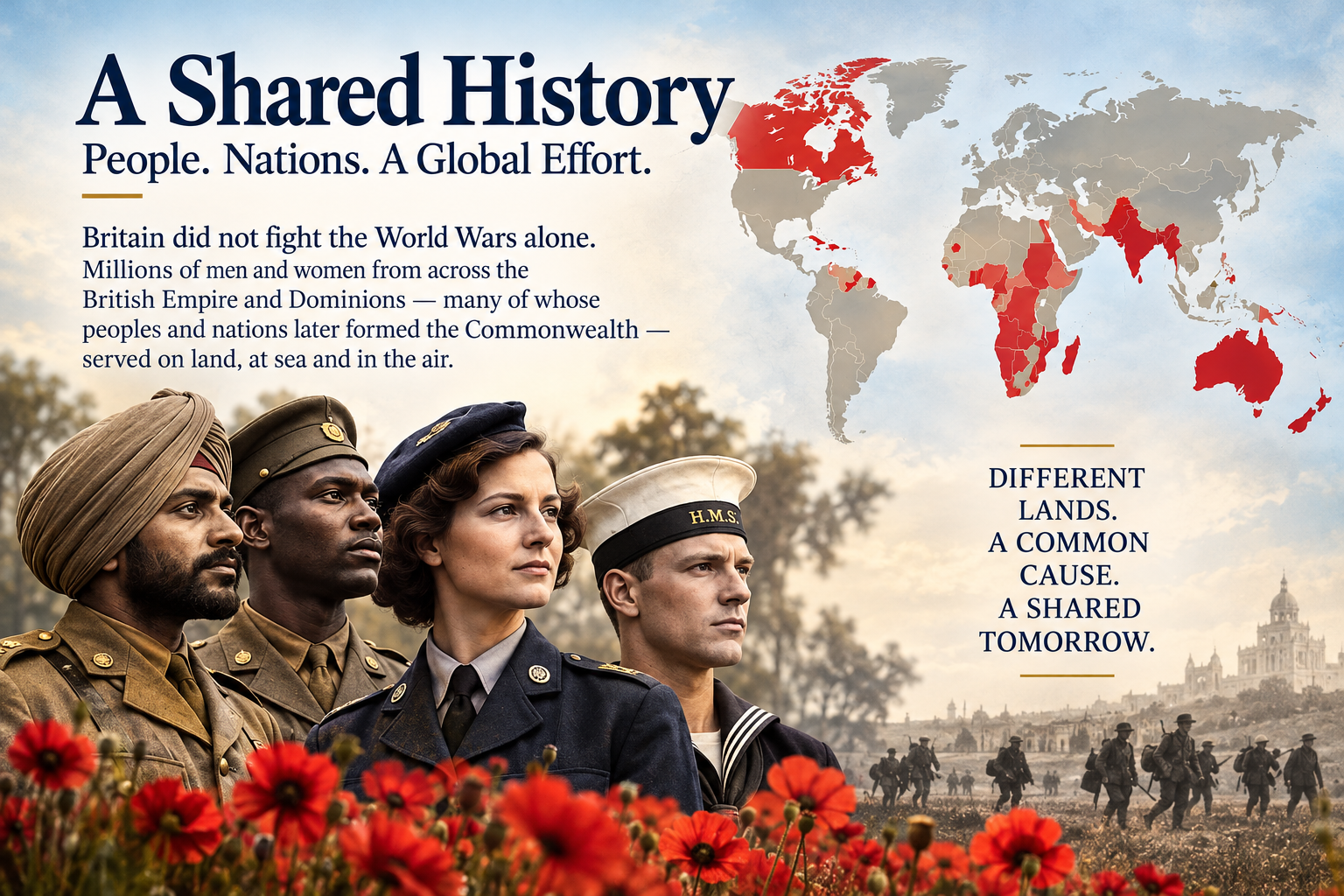
Britain did not fight the World Wars alone. Millions of people from across the Commonwealth and former British Empire served on land, at sea and in the air.
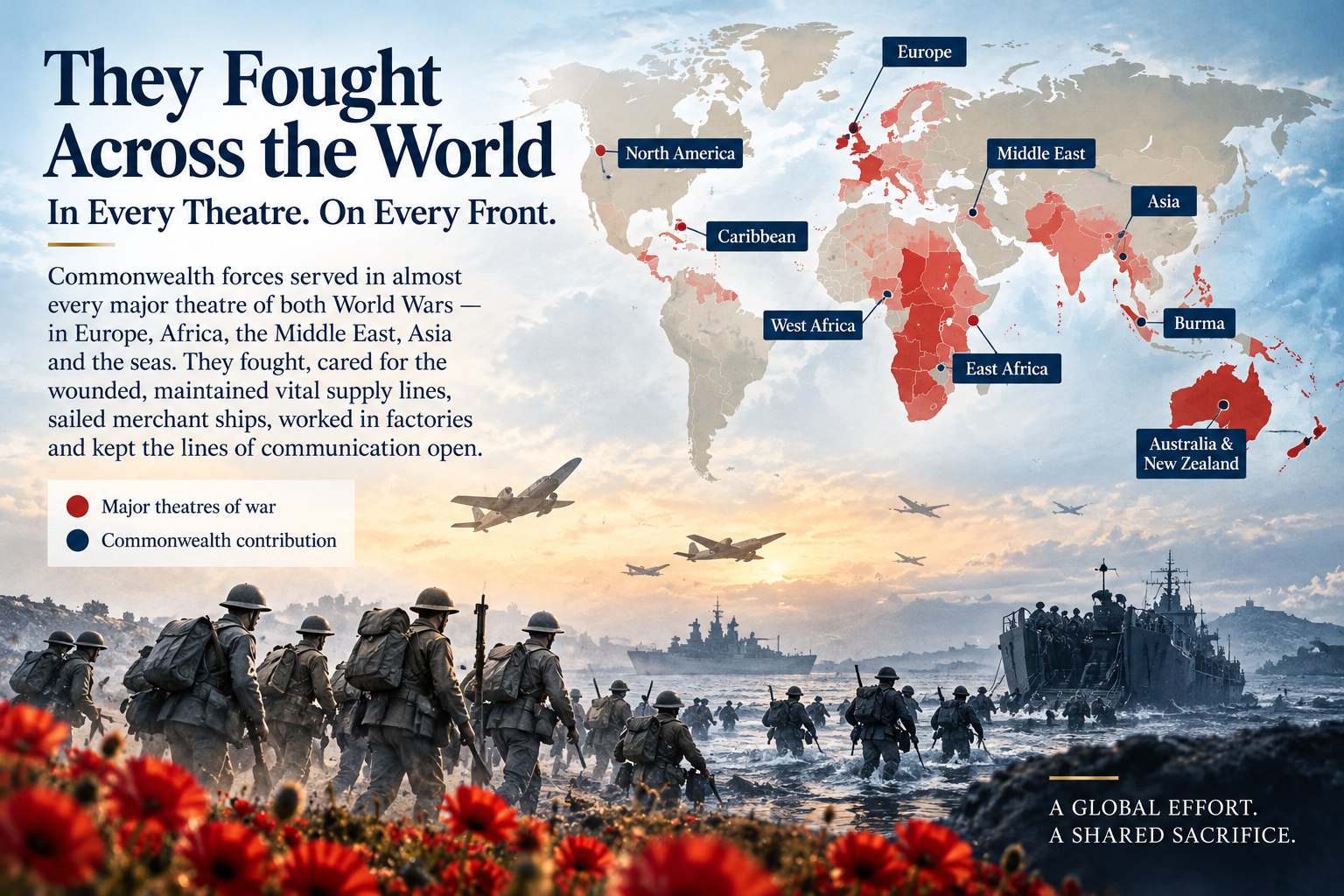
Men and women from the Indian subcontinent, Africa, the Caribbean, Canada, Australia, New Zealand and many other parts of the world fought in some of the most important battles of both World Wars. They carried supplies, treated the wounded, sailed merchant ships, maintained aircraft, worked in factories and kept vital lines of communication open.
Many never returned home. Yet, generations later, much of this history remains far less familiar than it should be.
Our memorials and heritage programmes exist to help ensure that their service, sacrifice and stories are not lost.
A Contribution Too Large to Overlook
One of the most remarkable stories is that of undivided India — encompassing people from territories that today include India, Pakistan and Bangladesh.
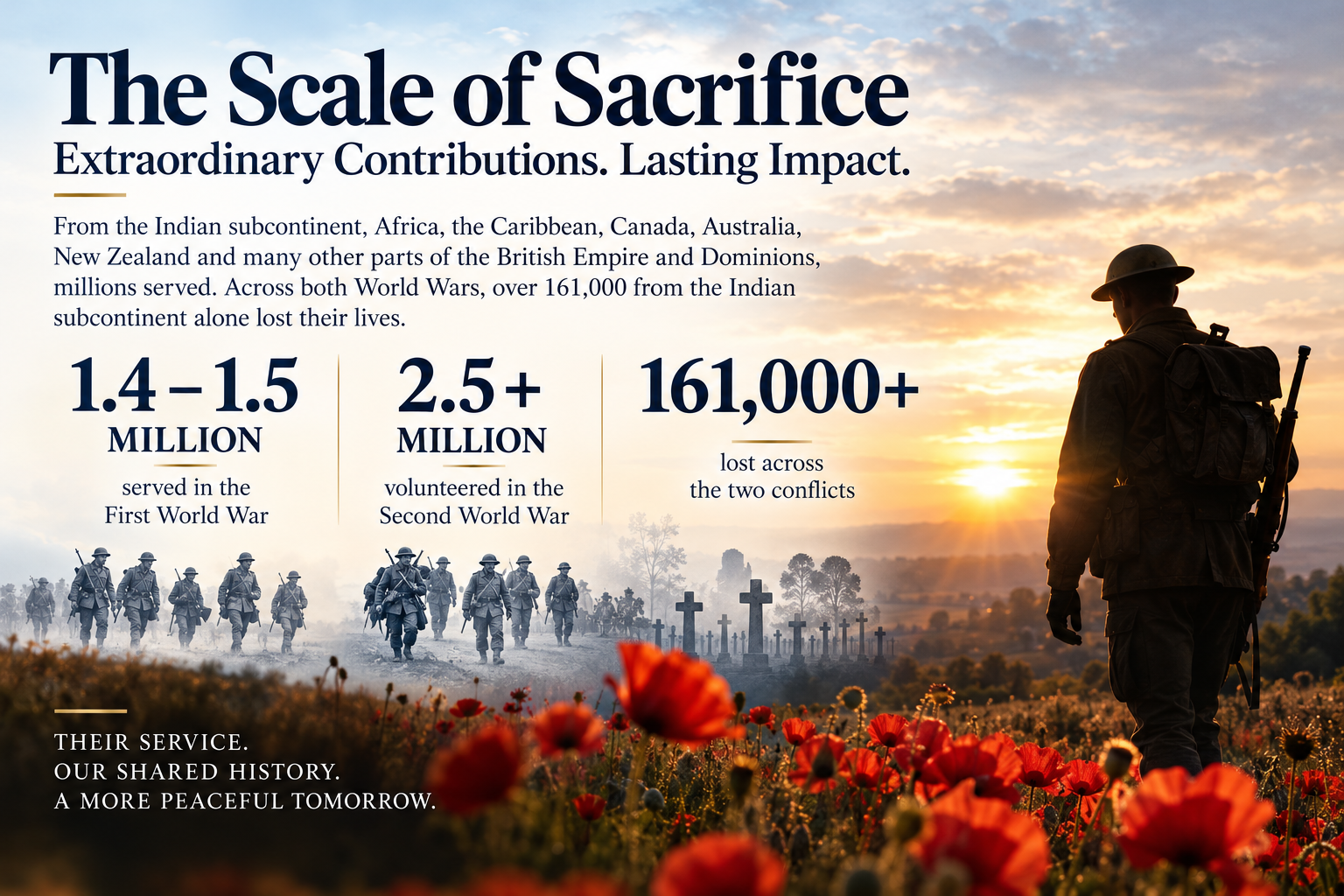
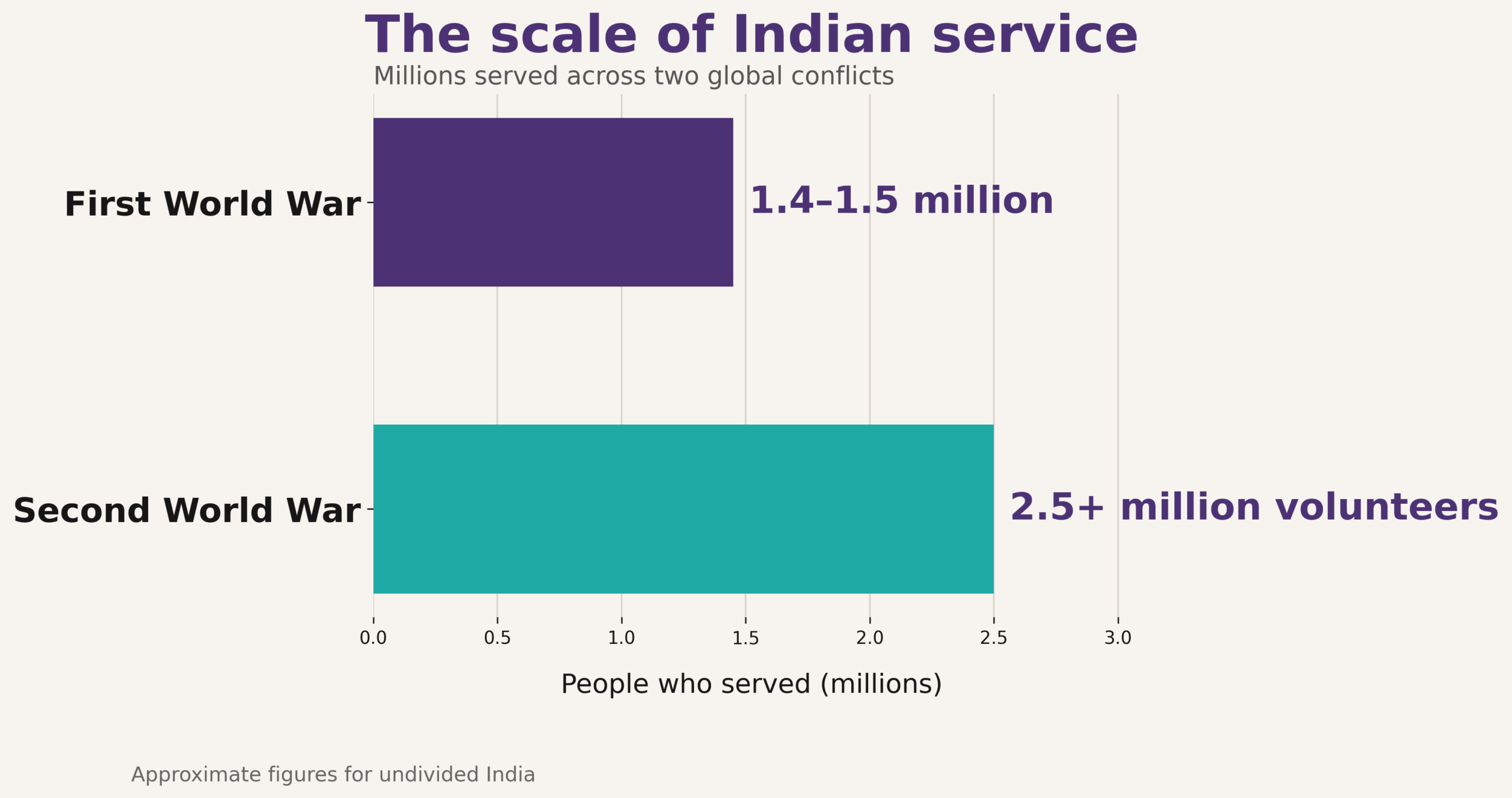
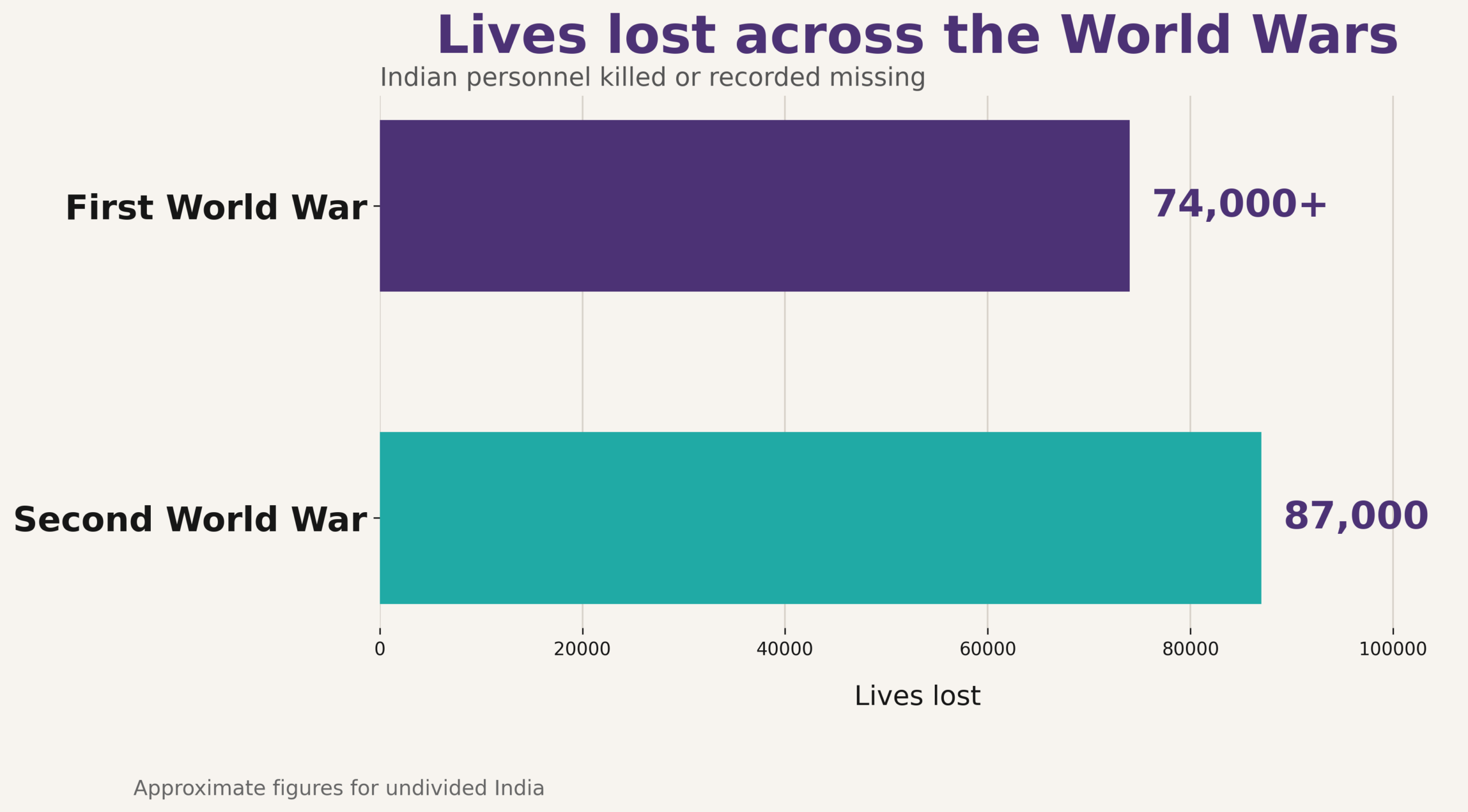
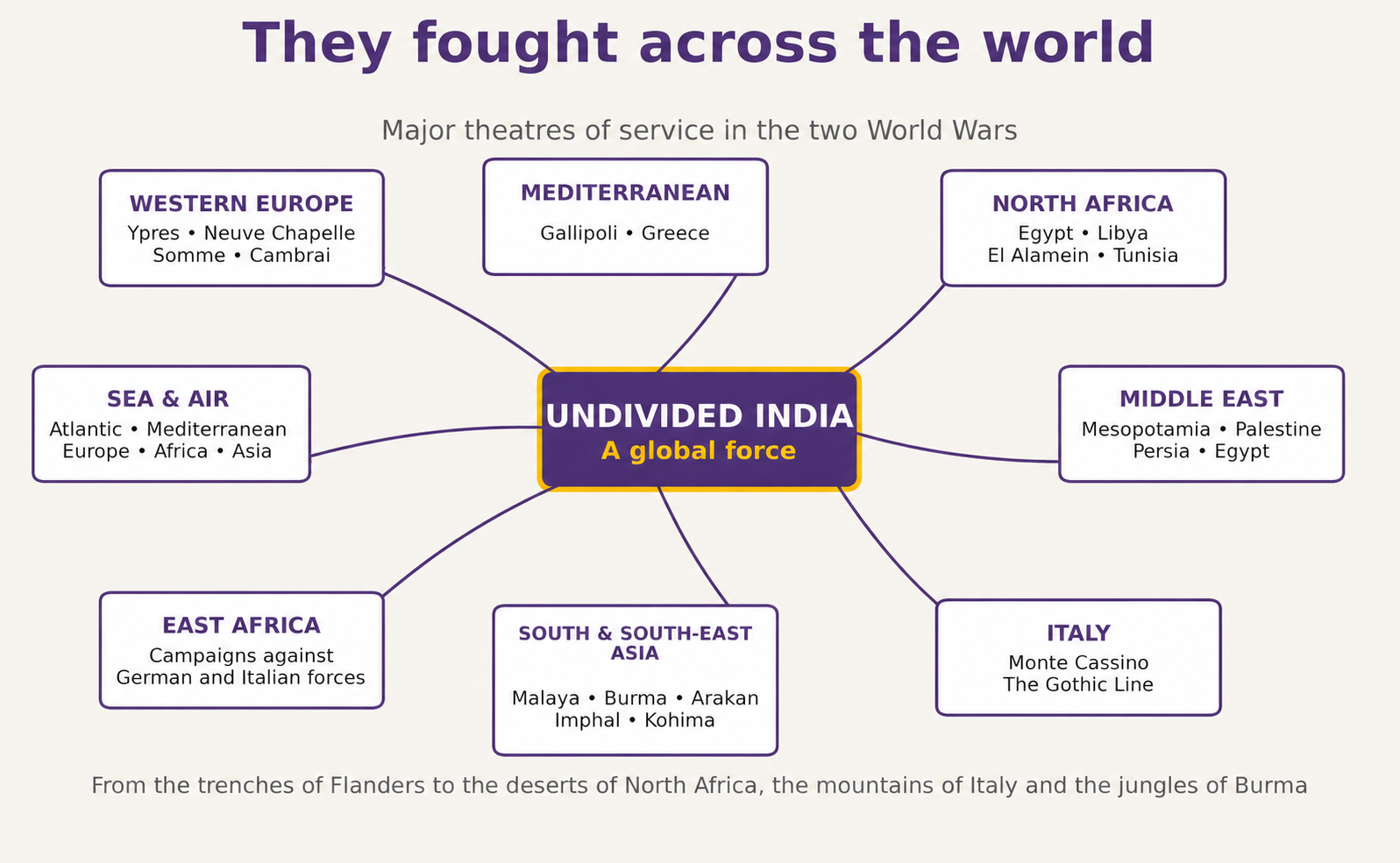
During the First World War, around 1.4–1.5 million Indian soldiers and non-combatants served. Around 138,600 Indian troops served on the Western Front, while Indian forces also fought in Mesopotamia, East Africa, Egypt, Palestine, Gallipoli and elsewhere. More than 74,000 Indian personnel were killed or recorded missing.
When the Second World War began, the Indian Army numbered under 200,000. By 1945 it had expanded to more than 2.5 million volunteers — the largest volunteer army in history. Indian troops fought in France, North and East Africa, the Middle East, Italy, Greece, Burma and the defence of India itself. Around 87,000 died.
Approximate figures for undivided India.Approximate figures for undivided India.
At a Glance
First World War
Scale: 1.4–1.5 million Indian soldiers and non-combatants served.
Reach and sacrifice: 138,600 served on the Western Front; more than 74,000 were killed or recorded missing.
Second World War
Scale: More than 2.5 million volunteers by 1945.
Reach and sacrifice: Service stretched from Europe and North Africa to Italy, Burma and the defence of India; around 87,000 died.
Recognition
The UK Parliament records more than 9,200 First World War decorations for personnel from the Indian subcontinent, including Victoria Crosses awarded to Muslim, Sikh and Hindu personnel.
A global force
The First World War Indian Army was not confined to India. Indian troops fought at Ypres, Neuve Chapelle, Festubert, Loos, the Somme and Cambrai on the Western Front, as well as in Mesopotamia, East Africa, Palestine, Egypt and Gallipoli. When the original British Expeditionary Force suffered devastating losses in 1914, Britain urgently needed reinforcements and two Indian divisions were sent to France.
In the Second World War the geographical spread was even greater. Indian troops served from the deserts of North Africa to the mountains of Italy, and from the Middle East to the jungles and hills of Burma and north-east India. The 4th Indian Division became a mainstay of the British Eighth Army, fighting through Africa before serving in Italy.
Decisive battles and turning points
Battles That Mattered
Open each section to discover what happened, why it mattered and what was at stake.
Ypres and the Western Front, 1914–15
Reinforcing Britain When Troops Were Desperately Needed
Indian troops arrived in France during one of the most precarious periods of the war. Severe British losses meant reinforcements were urgently required; Indian divisions were among the forces available for immediate deployment. They subsequently fought at Ypres, Neuve Chapelle, Festubert, Loos and other major engagements.
At Neuve Chapelle in March 1915, Indian troops constituted approximately half of the attacking force.
Why it mattered: Indian forces provided trained manpower at a time when the British Army had suffered enormous losses and the Western Front had to be held.
El Alamein, 1942
Turning the Tide in North Africa
Indian troops played an important part in the North African campaign. The 4th Indian Division had a vital role at El Alamein. The victory made the Axis position in North Africa increasingly untenable and was followed eventually by the surrender of Axis forces in Tunisia.
What was at stake? A sustained Axis success in Egypt would have endangered Allied control of this strategically crucial region and its communications through the eastern Mediterranean and Suez. El Alamein mattered far beyond the battlefield itself.
Tunisia, 1943
Removing Axis Forces from North Africa
After breaking Axis positions at Wadi Akarit, elements of the 4th Indian Division continued fighting during the advance through Tunisia. The division played an important part in bringing about the German surrender in North Africa in May 1943.
Why it mattered: The removal of Axis forces from North Africa helped make subsequent Allied operations into Sicily and Italy possible.
Monte Cassino, 1944
Breaking the Road Towards Rome
The battles of Monte Cassino were among the hardest fought of the Italian campaign. The 4th Indian Division, operating alongside the 2nd New Zealand Division, was given the extraordinarily difficult task of attacking the mountainous positions around Monastery Hill.
The wider battle eventually broke the German Gustav Line, opening the route towards Rome. It also demonstrates how interconnected Commonwealth service truly was: Indian, Gurkha, New Zealand, British and other Allied troops fought within the same operational campaign.
What if the line had held? The German defences blocked the principal Allied route north. Failure to break them would have further delayed the advance through Italy and tied down Allied troops and resources.
Imphal and Kohima, 1944
The Battles That Stopped the Japanese Advance into India
Japanese forces launched an offensive against north-east India intending to capture the supply bases around Imphal, cut the Dimapur–Imphal road and disrupt the Allied supply route to China.
At Kohima, a small British-Indian force held a desperately constrained defensive perimeter against a much larger Japanese force. At Imphal, the 5th, 17th, 20th and 23rd Indian Divisions held their ground. The Japanese offensive was eventually shattered. Imphal and Kohima became a turning point of the Burma campaign and one of the biggest defeats suffered by the Japanese Army.
What if Kohima and Imphal had been lost? Capturing Imphal could have enabled Japanese forces to interrupt air supplies to China and establish a base for air attacks against India. Their defeat instead created the springboard from which the Fourteenth Army went on to reconquer Burma.
Around 85% of the Fourteenth Army came from pre-partition India. The army that fought one of Britain’s most important campaigns against Japan was overwhelmingly a diverse, multinational force.
Many nations, one effort
A Truly Commonwealth War
India’s contribution was immense, but it was not alone.
Canada
Canada mobilised nearly 620,000 people during the First World War, from a population of only around eight million, with more than 66,000 deaths. Canadian forces established a formidable reputation through battles including Vimy Ridge and the Hundred Days of 1918.
In the Second World War, more than one million Canadians and Newfoundlanders served, with more than 45,000 losing their lives. Canadian forces participated in the Battle of the Atlantic, Sicily, Italy, Normandy and the liberation of the Netherlands.
Australia and New Zealand
Almost one million Australians served in the Second World War, fighting in Europe, North Africa, the Mediterranean, South-East Asia and the Pacific. Around 40,000 died.
More than 100,000 New Zealanders served overseas in the First World War, despite a national population of only just over one million. More than 18,000 died. During the Second World War around 140,000 served overseas.
Africa and South Africa
African forces were integral to the war effort. The West African Frontier Force drew particularly from Nigeria, the Gold Coast — now Ghana — and Sierra Leone. The King’s African Rifles recruited from Kenya, Uganda and Nyasaland — now Malawi — while tens of thousands of Africans provided vital logistical support.
South African forces fought in East Africa, North Africa and Italy during the Second World War. Approximately 135,000 white South Africans served against Italian and German forces, alongside around 70,000 Black and Coloured personnel serving principally in labour and support formations.
The Caribbean
The Caribbean contribution reached far beyond ground forces. During the Second World War, around 6,000 Black Caribbean volunteers joined the RAF, including approximately 450 aircrew, while women from the Caribbean also served in the Women’s Auxiliary Air Force.
Every role mattered
Not Only Soldiers
The war effort depended upon sailors, pilots, mechanics, engineers, nurses, drivers, labourers, merchant seamen, intelligence personnel and factory workers. Asian servicemen worked as pilots and ground crew; seafarers kept communications open; and civilians produced vital wartime equipment.
During the Second World War the Royal Indian Navy operated in the North Atlantic and Mediterranean, while around 40,000 Indians served in the British Merchant Navy.
LAND
SEA
AIR
INTELLIGENCE
MEDICAL
LOGISTICS
INDUSTRY
Stories behind the statistics
Courage Had Many Faces
Noor Inayat Khan GC
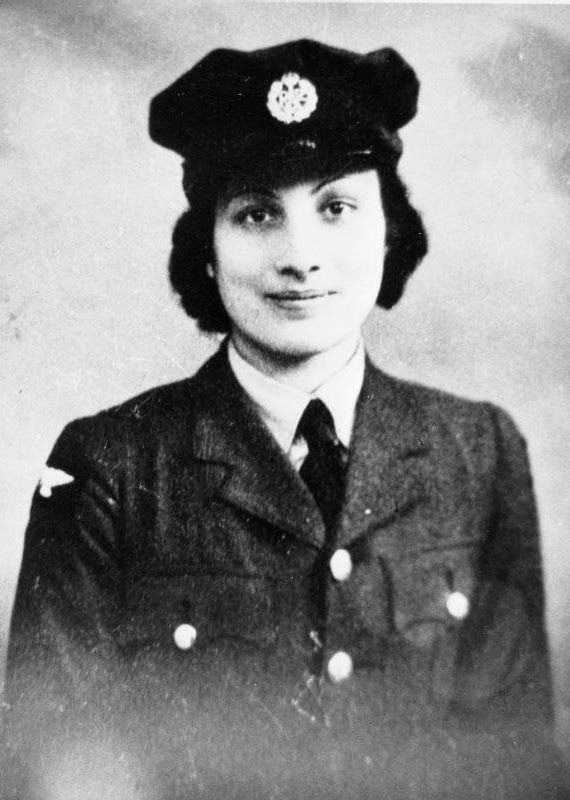
Born to an Indian Muslim father, the Sufi teacher and musician Inayat Khan, and an American mother, Amina Begum, Noor Inayat Khan came from a distinguished Indian Muslim lineage and was a descendant of Tipu Sultan, the 18th-century ruler of Mysore. She served Britain in the Women’s Auxiliary Air Force and later with the Special Operations Executive, becoming the first female wireless operator sent into Nazi-occupied France. Captured by the Gestapo, she was executed at Dachau in 1944 after refusing to betray her comrades. Her courage was recognised posthumously with the George Cross and the Croix de Guerre with Gold Star.
The individual stories below reveal the human dimension of service: different nations, faiths and backgrounds united by extraordinary courage.
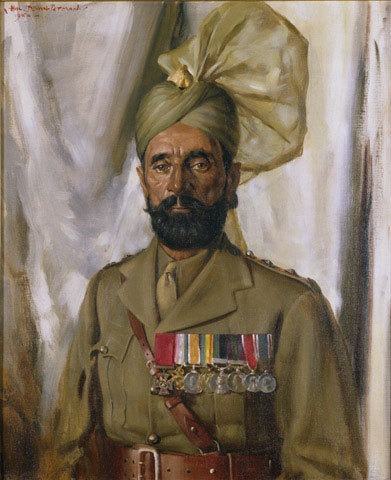
Sepoy Khudadad Khan VC
Born in Punjab in what is now Pakistan, Khudadad Khan served as a machine-gunner with the 129th Baluchis. His gallantry on the Western Front made him the first native-born Indian recipient of the Victoria Cross.
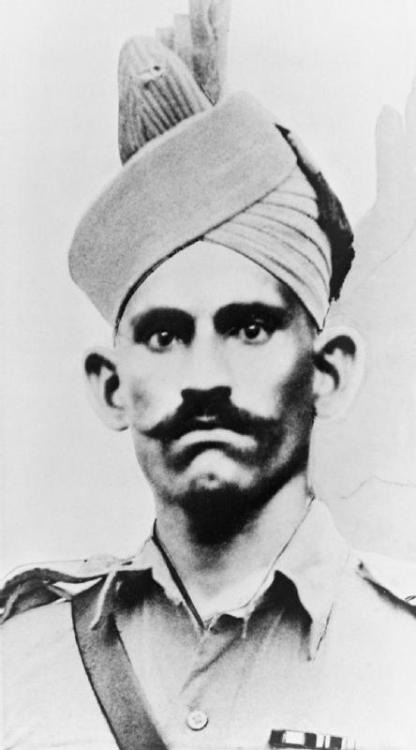
Born in Punjab, Abdul Hafiz continued to lead his men despite being wounded twice during fighting in Burma. His leadership enabled the position to be captured. He died from his wounds and received the Victoria Cross posthumously.
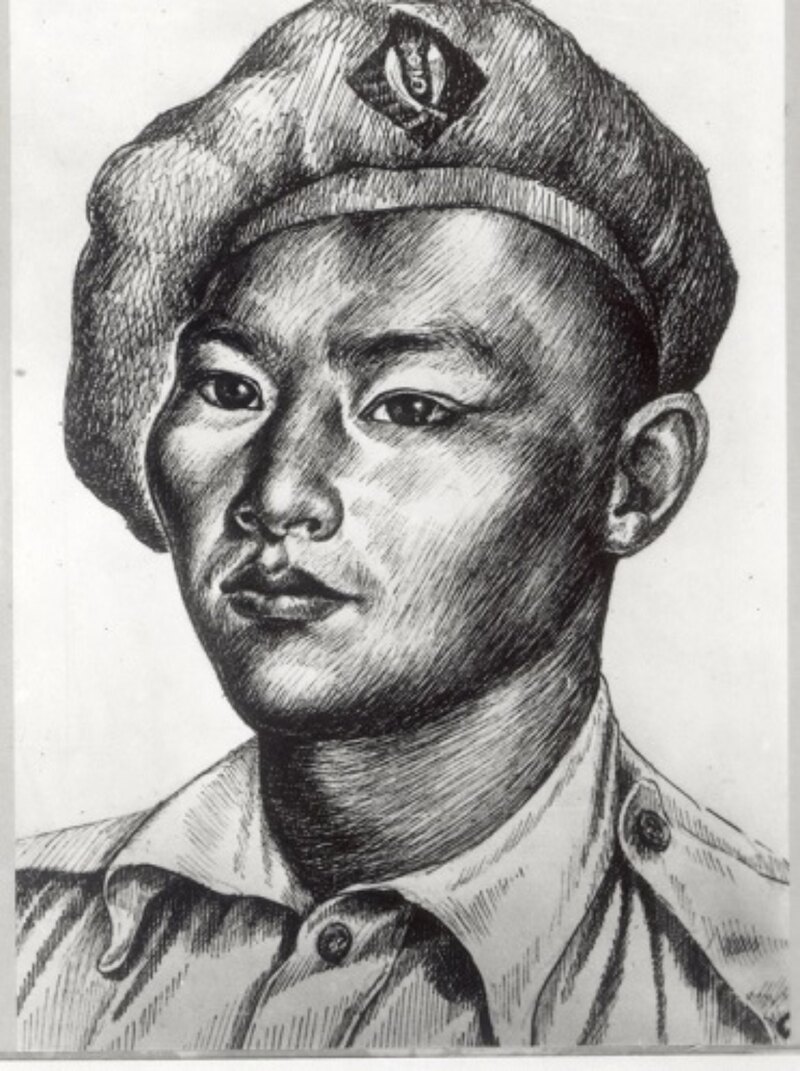
A Gurkha from Nepal serving in the Indian Army, Thaman Gurung was just 20 years old when he was killed during operations in Italy and posthumously awarded the Victoria Cross. Portrait source: The Gurkha Museum.
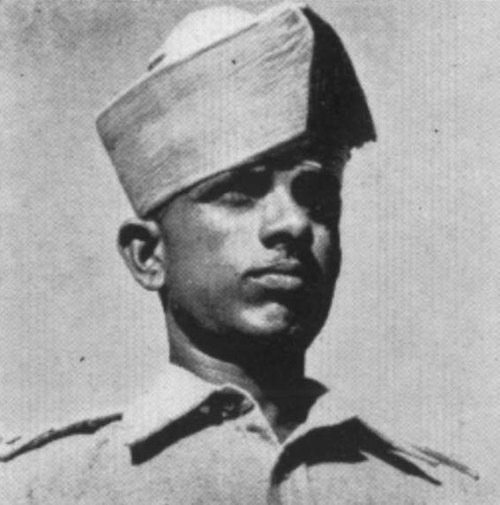
Kamal Ram served with the 8th Punjab Regiment and became the youngest Indian recipient of the Victoria Cross during the Second World War, aged only 19.
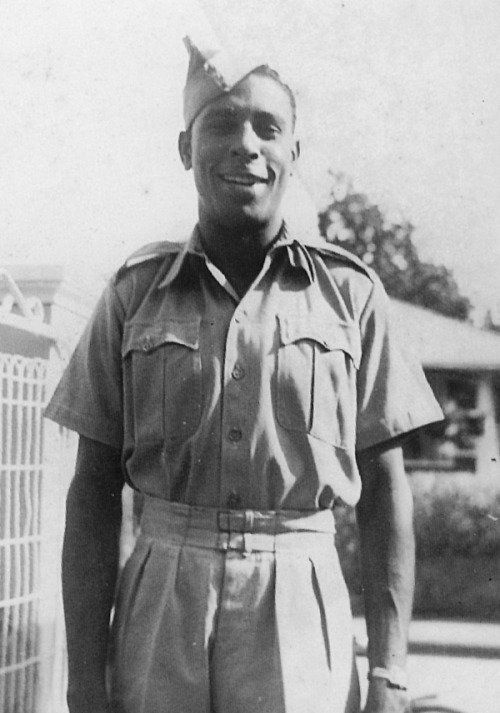
Born in Jamaica, Euan Lucie-Smith served with the 1st Battalion, Royal Warwickshire Regiment during the First World War. One of the earliest commissioned infantry officers of African heritage in the British Army, he was killed at the Second Battle of Ypres on 25 April 1915, aged 25. His story illustrates both the diversity of Britain’s wartime forces and the barriers faced by men of African and Caribbean heritage who sought to serve as officers.
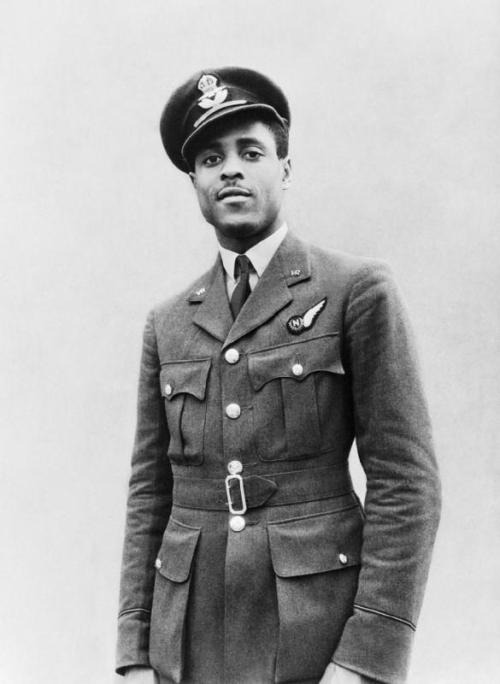
Born in Trinidad, Cross served with RAF Bomber Command and was awarded both the Distinguished Flying Cross and Distinguished Service Order. He became one of the most highly decorated West Indian airmen of the Second World War.
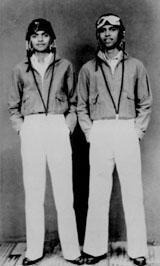
From Malaya, Cyril Talalla served as an RAF pilot and was awarded the Distinguished Flying Cross and Bar. His brother Henry also served as an RAF pilot and was killed in 1944.
Born in Sierra Leone, Smythe volunteered for the RAF and served as a navigator. His story is another reminder that Britain’s wartime air force drew personnel from across the world.
Victoria Cross • George Cross • Distinguished Flying Cross • Distinguished Service Order • Military Cross • Indian Order of Merit
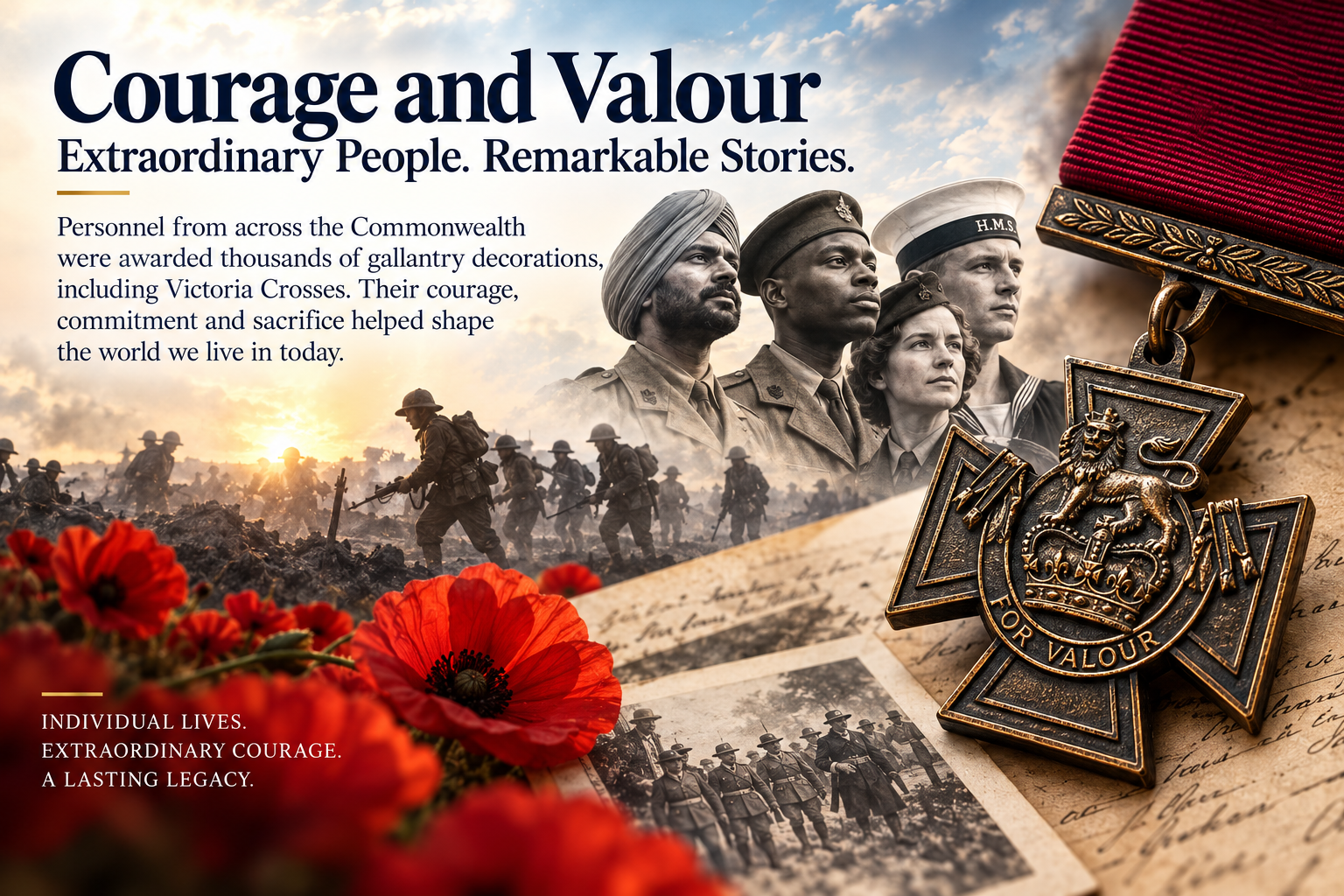
Across two World Wars, Commonwealth and Empire personnel received thousands of awards for courage, gallantry, leadership and distinguished service.
They were Hindu, Muslim, Sikh, Christian, Jewish and of other faiths and none. They came from different languages, cultures, ethnicities and nations.
Their courage was individual. Their sacrifice was shared.
The purpose of remembrance
Why Does This Matter Today?
Remembrance should tell the whole story.
For generations, Britain’s remembrance traditions have rightly honoured the extraordinary courage and sacrifice of those who defended freedom in two World Wars. But the story is larger, more diverse and more international than many people realise.
Men and women travelled from the Indian subcontinent, Africa, the Caribbean and across the Dominions to serve alongside people from Britain. Some volunteered from communities thousands of miles from the battlefields on which they eventually died.
Their contribution does not diminish anyone else’s sacrifice. It completes the picture. Remembering them is not about rewriting history. It is about telling more of it.
When young people of Commonwealth heritage discover that people who looked like them, shared their faith, came from their ancestral towns and villages, or spoke the languages of their grandparents were part of Britain’s wartime story, remembrance becomes something in which they too can see themselves.
That creates a powerful connection between history, identity, citizenship and belonging.
This is Why We Build Memorials.
Not simply to preserve names in stone, but to keep memory alive; to educate future generations; to recognise service fairly; and to ensure that those who stood together in war are remembered together in peace.
“Their contribution does not compete with Britain’s story. It is part of Britain’s story.”
“We are not changing the history of Remembrance. We are completing it.”
From statistics to people
Every Form of Service Carried a Story
Behind every number was a person: an individual with a family, a home, a faith or philosophy, and hopes for a future beyond war. The Commonwealth story includes people in every kind of service.
THE SOLDIER
THE PILOT
THE SAILOR
THE WOMAN IN UNIFORM
THE SECRET AGENT
THE MEDIC
THE LABOURER
Our shared inheritance
Their Legacy is Our Inheritance
The Commonwealth contribution to the World Wars was not marginal to the story of victory. It formed part of the manpower, resources, logistics and fighting strength upon which the Allied war effort depended.
From the trenches of Flanders to the deserts of North Africa; from Monte Cassino to the jungles of Burma; from Atlantic convoys to the skies above occupied Europe, people from across the world served and sacrificed together.
Many received medals. Many came home changed forever. Many never came home at all.
Their descendants now form an integral part of modern Britain. We owe it to those who served, and to the generations who follow us, to ensure that their contribution is known, understood and remembered.
Equity in Remembrance does not mean remembering some people less. It means remembering everyone fully.
Further Reading and Authoritative Sources
The National Archives — Loyalty and Dissent: Indian Army in the First World War, including primary-source material on the arrival of Indian forces on the Western Front and the scale of Indian service.
National Army Museum — material on the Battles of Imphal and Kohima and their strategic importance.
UK Government — The World’s War in Europe, an overview of Indian, Dominion and colonial participation in the Second World War.
Royal British Legion — VJ Day and Fourteenth Army history, including the contribution of pre-partition India in the Far East.
Australian War Memorial — material on Gallipoli, the Western Front, North Africa, Europe and the Pacific.
New Zealand History — government-supported service figures and campaign histories for the First and Second World Wars.
Veterans Affairs Canada — accessible history and authoritative Canadian service figures.
RAF Museum — Pilots of the Caribbean, exploring Caribbean RAF participation and the barriers faced by Black volunteers.
Bristol Museums — We Were Everywhere, examining the Indian Army and the often overlooked global character of the World Wars.